Hernia
A Hernia happens when an internal organ pushes through a weak spot in your muscle or tissue. There are several types of Hernia that you can experience including, inguinal hernias, femoral hernias, umbilical hernias and hiatal hernias. If you have a Hernia, it's important to treat it quickly.
Common types of hernias include umbilical Hernia, inguinal Hernia, and femoral Hernia.
What is a Hernia?
A Hernia occurs when an internal organ or other body part protrudes through the wall of muscle or tissue that normally contains it. Most hernias occur within the abdominal cavity, between the chest and the hips.
The most common forms of Hernia are:
- Inguinal Hernia: In men, the inguinal canal is a passageway for the spermatic cord and blood vessels leading to the testicles. In women, the inguinal canal contains the round ligament that gives support for the uterus. In an inguinal Hernia, fatty tissue or a part of the intestine pokes into the groin at the top of the inner thigh. This is the most common type of Hernia, and affects men more often than women.
- Femoral Hernia: Fatty tissue or part of the intestine protrudes into the groin at the top of the inner thigh. Femoral hernias are much less common than inguinal hernias and mainly affect older women.
- Umbilical Hernia: Fatty tissue or part of the intestine pushes through the abdomen near the navel (belly button).
- Hiatal (hiatus) Hernia: Part of the stomach pushes up into the chest cavity through an opening in the diaphragm (the horizontal sheet of muscle that separates the chest from the abdomen).
Other types of hernias include:
- Incisional Hernia: Tissue protrudes through the site of an abdominal scar from a remote abdominal or pelvic operation.
- Epigastric Hernia: Fatty tissue protrudes through the abdominal area between the navel and lower part of the sternum (breastbone).
- Spigelian Hernia: The intestine pushes through the abdomen at the side of the abdominal muscle, below the navel.
- Diaphragmatic Hernia: Organs in the abdomen move into the chest through an opening in the diaphragm. How common are hernias? Of all hernias that occur:
- 75 to 80% are inguinal or femoral.
- 2% are incisional or ventral.
- 3 to 10% are umbilical, affecting 10 to 20% of newborns; most close by themselves by 5 years of age.
- 1 to 3% are other types.
- Swelling or bulge in the groin or scrotum (the pouch that contains the testicles).
- Increased pain at the site of the bulge.
- Pain while lifting.
- Increase in the bulge size over time.
- A dull aching sensation.
- A sense of feeling full or signs of bowel obstruction.
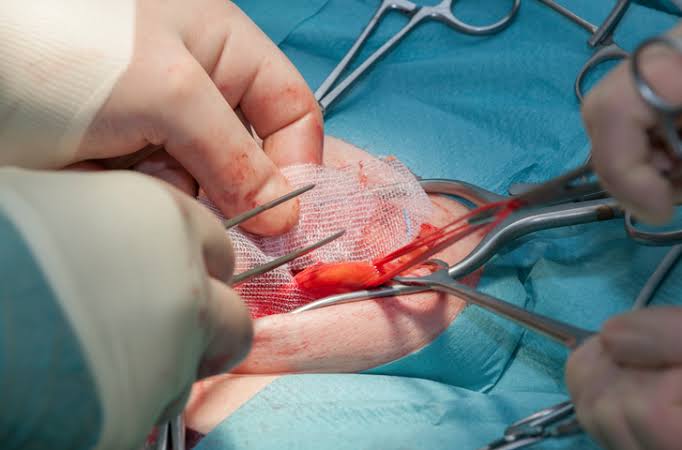
- Open surgery, in which a cut is made into the body at the location of the Hernia. The protruding tissue is set back in place and the weakened muscle wall is stitched back together. Sometimes a type of mesh is implanted in the area to provide extra support.
- Laparoscopic surgery involves the same type of repairs. However, instead of a cut to the outside of the abdomen or groin, tiny incisions are made to allow for the insertion of surgical tools to complete the procedure.
- Robotic Hernia repair, like laparoscopic surgery, uses a laparoscope, and is performed with small incisions. With robotic surgery, the surgeon is seated at a console in the operating room, and handles the surgical instruments from the console. While robotic surgery can be used for some smaller hernias, or weak areas, it can now also be used to reconstruct the abdominal wall.
- Obstruction (incarceration): Part of the intestine becomes stuck in the inguinal canal, causing nausea, vomiting, stomach pain, and a painful lump in the groin.
- Strangulation: Part of the intestine is trapped in a way that cuts off its blood supply. In such cases, emergency surgery (within hours of occurring) is necessary to prevent tissue death.
- Maintain ideal body weight by eating a healthy diet and exercising.
- Eat enough fruits, vegetables and whole grains to avoid constipation.
- Use correct form when lifting weights or heavy objects. Avoid lifting anything that is beyond your ability.
- See a doctor when you are ill with persistent coughs or sneezing.
- Don't smoke, as the habit can lead to coughing that triggers a Hernia.
SYMPTOMS AND CAUSES
What causes a Hernia?
Inguinal and femoral hernias are due to weakened muscles that may have been present since birth, or are associated with aging and repeated strains on the abdominal and groin areas. Such strain may come from physical exertion, obesity, pregnancy, frequent coughing, or straining on the toilet due to constipation. Adults may get an umbilical Hernia by straining the abdominal area, being overweight, having a long-lasting heavy cough or after giving birth. The cause of hiatal hernias is not fully understood, but a weakening of the diaphragm with age or pressure on the abdomen could play a part. What are the symptoms of a Hernia? A Hernia in the abdomen or groin can produce a noticeable lump or bulge that can be pushed back in, or that can disappear when lying down. Laughing, crying, coughing, straining during a bowel movement, or physical activity may make the lump reappear after it has been pushed in. More symptoms of a Hernia include:In the case of hiatal hernias there are no bulges on the outside of the body. Instead, symptoms may include heartburn, indigestion, difficulty swallowing, frequent regurgitation (bringing food back up) and chest pain.
DIAGNOSIS AND TESTS
How is a Hernia diagnosed?
It is usually possible to see or feel a bulge in the area where a Hernia has occurred by physical exam. As part of a male's typical physical exam for inguinal hernias, the doctor feels the area around the testicles and groin while the patient is asked to cough. In some cases, soft-tissue imaging like a CT scan will accurately diagnose the condition.
MANAGEMENT AND TREATMENT
What kind of doctor do you see for a Hernia?
When you have a Hernia, treatment will start with your primary care provider. If you need surgery to repair the Hernia, you'll be referred to a general surgeon. If you think you have a Hernia, don't wait to seek help. A neglected Hernia can grow larger and more painful - this can lead to complications and possibly emergency surgery. Early repair is more successful, less risky and offers a better recovery and outcome.
How is a Hernia treated?
Hernias are usually treated with surgery. The surgeon will tailor the method of repair that best meets your needs.
In the case of an umbilical Hernia in a child, surgery may be recommended if the Hernia is large or if it has not healed by the age of 4 to 5 years old. By this age, a child can usually avoid surgical complications.
If an adult has an umbilical Hernia, surgery is usually recommended because the condition will not likely improve on its own and the risk of complications is higher.
One of three types of Hernia surgery can be performed:Each type of surgery has its advantages and disadvantages.
The best approach will be decided by the patient's surgeon.
What can happen if a Hernia is not treated?
Other than umbilical hernias in babies, hernias will not disappear on their own. Over time, a Hernia can grow larger and more painful or can develop complications.Complications of an untreated inguinal or femoral Hernia may include:
How can a Hernia be prevented?
OUTLOOK / PROGNOSIS
What can be expected following surgical treatment for a Hernia?
After surgery, you will be given instructions. These include what diet to follow, how to care for the incision site, and how to take care to avoid physical strain. Hernias may recur regardless of the repair operations. This is sometimes caused by inherent tissue weakness or protracted healing. Smoking and obesity are also major risk factors for Hernia recurrence.